Marine Electrical Failures at Sea: What Causes Them and How to Reduce the Risk
Electrical failures at sea are among the most disruptive defects a vessel can face during operation. A switchboard fault, an emergency generator that does not start, a motor failing under load, or navigation equipment dropping out at the wrong moment can quickly turn a manageable technical issue into delay, off-hire exposure, class involvement, or port state control attention.
In most cases, the problem is not that the defect could not have been repaired. The problem is where and when it appears. Electrical systems rarely fail at a convenient time. They fail during manoeuvring, under operational load, during inspection, or when the vessel is working against schedule pressure and has very little room for disruption.
Most marine electrical failures are not sudden events. They are the final result of deterioration that was already developing onboard but was not identified early enough or not treated with the required urgency.
Why Marine Electrical Systems Fail in Service
Marine electrical systems work in an environment that is constantly hostile to reliability. Heat, salt-laden air, vibration, moisture, load variation, contamination, and repeated start-stop cycles all accelerate wear. Over time, terminals loosen, insulation condition drops, breaker contacts wear, battery performance weakens, and hidden faults begin to build up across the system.
What makes electrical defects particularly dangerous is that many of them develop quietly. A cable may continue operating with damaged insulation. A battery may still show acceptable voltage at rest while already being unable to support the required load. A motor may continue running while insulation resistance is steadily falling. The system still appears available, but its margin is already reduced.
This is why electrical reliability is rarely only a question of equipment age. It is more often a question of condition visibility, maintenance discipline, and whether testing is carried out as a formality or as an actual control measure.
Electrical failures rarely arrive without warning. In many cases, the warning signs are already there onboard. The issue is that they are not trended, not load-tested, not investigated further, or simply postponed until the system finally fails in service.
The Most Common Marine Electrical Failure Modes
Switchboard faults and overheating connections
Loose busbar connections, contaminated panels, ageing breaker components, and poor contact surfaces create localised heating and unstable performance. The first visible symptoms may be nuisance tripping, hot spots, intermittent alarms, or abnormal smell. Left unresolved, these defects can escalate into serious power distribution failure.
Electric motor winding deterioration
Motor failures rarely start with complete breakdown. They usually begin with insulation ageing, moisture ingress, contamination, thermal stress, or prolonged operation under difficult conditions. By the time the motor trips or burns out, the deterioration has normally been progressing for some time.
Cable insulation damage and earth faults
Cables suffer from vibration, mechanical impact, heat, poor routing, moisture ingress, and age-related insulation degradation. Early-stage cable issues often appear first as intermittent earth faults, unstable readings, or unexplained alarms.
Battery and UPS system failure
Battery condition is often overestimated because static voltage readings still appear acceptable. In reality, the real weakness only becomes visible when the unit is placed under load.
Navigation and bridge equipment power instability
Poor earthing, unstable supply, weak UPS performance, degraded batteries, or unresolved panel defects can all create intermittent failures that become visible exactly when the system is tested during inspection or relied on during operation.
Thruster, deck machinery, and auxiliary motor failures
These failures tend to surface when demand is highest. A motor that appears serviceable during ordinary operation may struggle during manoeuvring, cargo work, anchor handling, or other periods of elevated load.
Emergency generator non-start or unstable performance
Emergency generator failures remain one of the most serious and avoidable risk areas. In many cases, the root cause is not catastrophic damage but poor readiness: battery weakness, starting circuit issues, control defects, fuel-related problems, or insufficient routine testing under realistic conditions.
Electrical systems do not need to be visibly broken to be high-risk. They only need to be operating with reduced margin, and that condition often remains hidden until the vessel is placed under pressure.
What Preventive Maintenance Actually Reduces Risk
Preventive maintenance is effective only when it verifies condition, not when it simply records that a routine was completed. For marine electrical systems, this means testing methods that show deterioration before service failure occurs.
- Insulation resistance testing of motors, cables, and critical circuits, with results recorded and compared over time
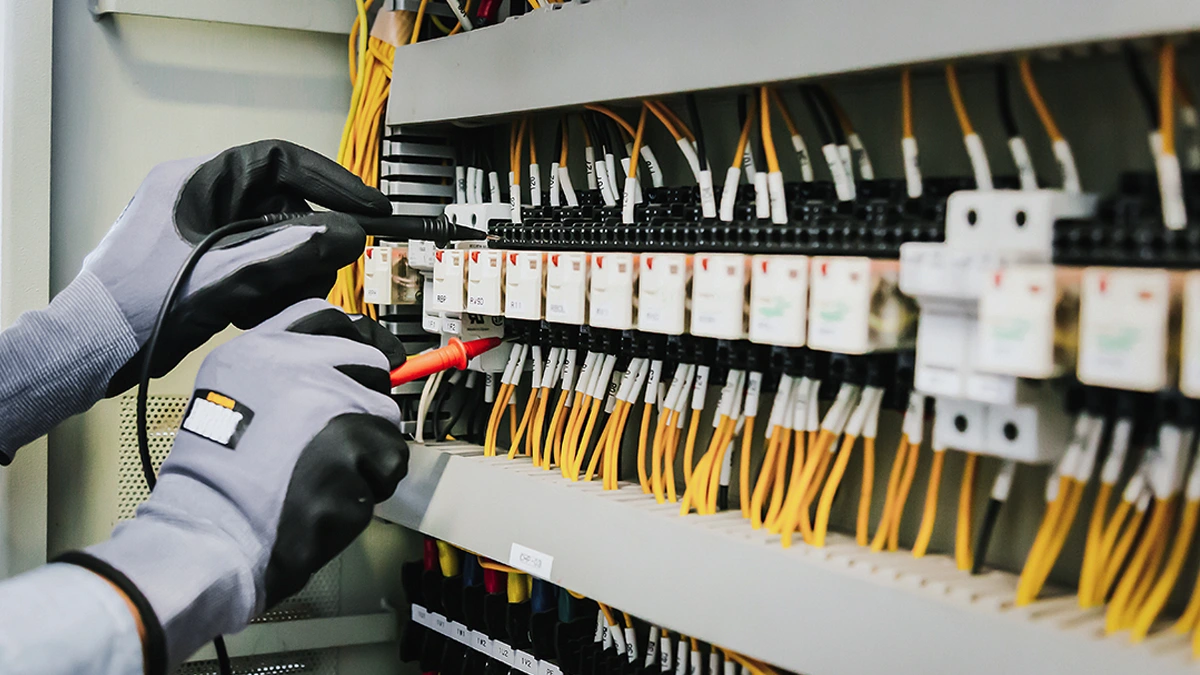
- Thermographic inspection of switchboards, panels, and high-load connections to identify developing hot spots
- Battery load testing instead of relying only on open-circuit voltage readings
- Functional verification of emergency generator starting and changeover performance
- Checking breaker condition, terminal tightness, panel cleanliness, and signs of overheating or carbonisation
- Monitoring motors and rotating electrical equipment for abnormal heat, vibration, and loading behaviour
- Investigating recurring trips, unstable alarms, or intermittent faults instead of treating them as isolated incidents
The common thread in all of these actions is measurable condition control. Without that, maintenance becomes routine-driven rather than risk-driven, and the vessel loses the opportunity to intervene before the defect becomes operational.
An electrical maintenance task only has real value when it confirms condition, reveals deterioration, or leads to action. Otherwise, it is paperwork, not control.
When Specialist Electrical Support Becomes Necessary
Many routine electrical checks can and should be handled onboard. But once the issue moves beyond basic maintenance, specialist support becomes necessary not only for repair quality, but for speed of diagnosis, safe execution, and proper return to service.
This typically includes cases such as:
- switchboard repair, busbar work, breaker replacement, and fault tracing in live operational environments
- motor removal, workshop inspection, rewinding, reconditioning, and reinstallation planning
- complex cable replacement where access, routing, and continuity verification are critical
- automation and control circuit diagnostics where the root cause is not immediately visible
- electrical defects linked to class findings, inspection deficiencies, or repeated operational failure
In these situations, delay is rarely caused only by the defect itself. It is often caused by the time lost between first symptoms, incomplete troubleshooting, temporary onboard workarounds, and the eventual decision to call in proper support.
PSC and Inspection Risk
Electrical condition becomes particularly sensitive when the vessel is approaching inspection, port call, or class attendance. Inspectors will not assess the intent of the maintenance plan. They will assess whether the equipment works, whether emergency functions respond correctly, and whether the visible condition of the system raises concern.
The areas most commonly attracting attention include:
- emergency generator readiness and automatic start performance
- switchboard cleanliness, integrity, and signs of overheating or poor maintenance
- navigation and communication equipment functionality
- alarm systems and backup power arrangements
- visible cable damage, temporary repairs, and poor electrical housekeeping
Most of these risks are not impossible to detect onboard. In many cases, they are already visible before inspection. What separates a controlled situation from a detention risk is whether the vessel acts early enough and whether the defect is treated as operationally critical before an inspector does.
Conclusion
Marine electrical failures at sea are rarely random. They are usually the result of deterioration that was allowed to continue until the system was placed under the wrong load, at the wrong time, in the wrong operational window.
For fleet managers and technical superintendents, electrical reliability is not only a maintenance concern. It is a planning, inspection, and operational continuity issue. The earlier the degradation is identified, the more options remain available for safe and controlled repair.
In most cases, the defect is not where the real cost starts. The real cost starts when the warning signs were already there and nothing was done in time.
Marine Electrical and Automation Support from SSE
Ship System Electric Ltd provides onboard electrical diagnostics, fault finding, cable installation and replacement, switchboard repairs, electric motor and generator repair support, and automation-related works.
Services are carried out during voyage, in port, and in dry dock according to the defined technical scope.
View SSE electrical and automation services.