Ship Welding Repair Requirements:
What to Check Before Work Begins?
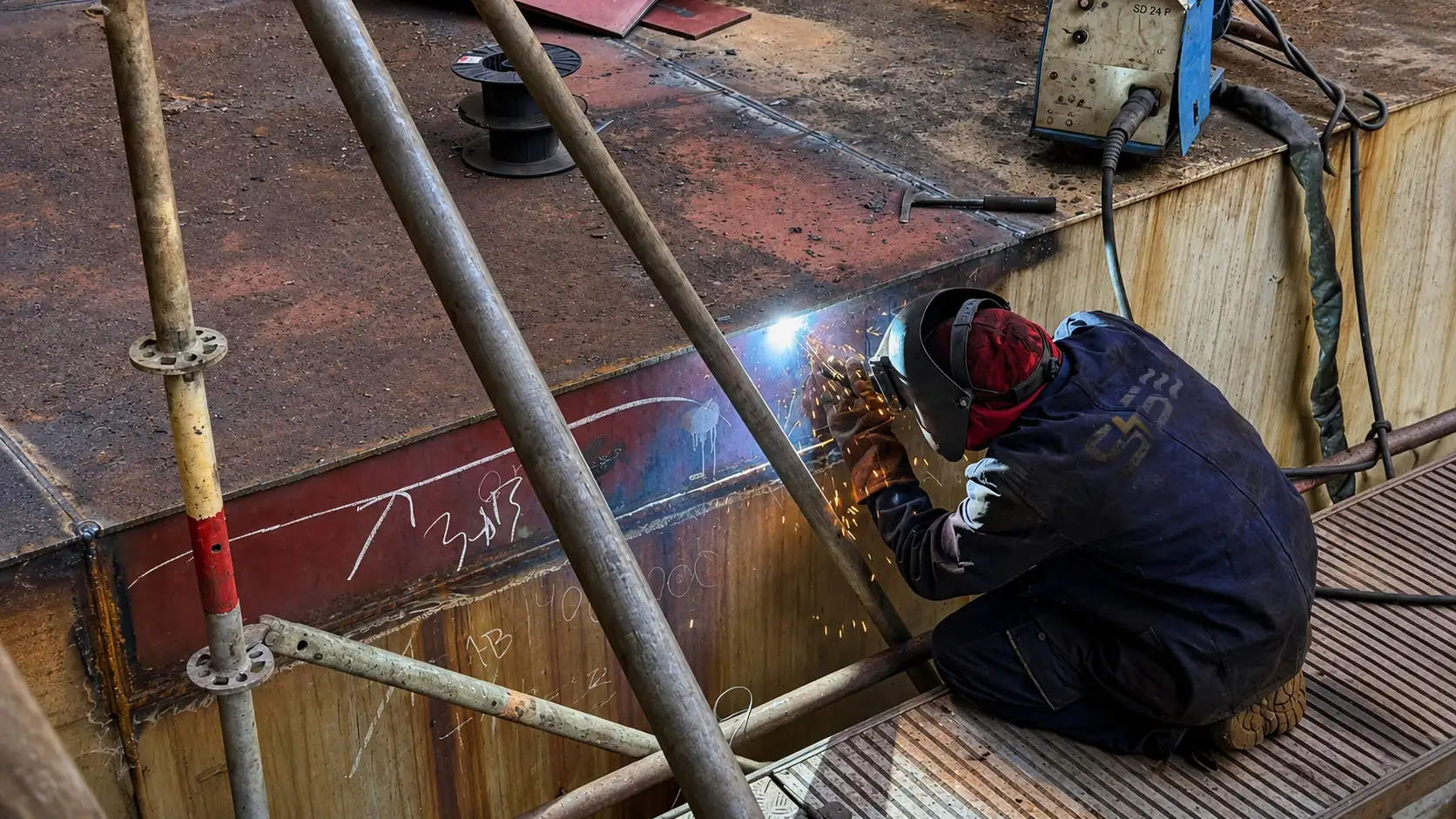
Before a ship welding repair begins, the responsible parties should confirm the repair scope, applicable Welding Procedure Specification (WPS), welder qualifications, materials, inspection and testing requirements, and any necessary class involvement.
The exact requirements depend on the affected structure or system, material, joint configuration, welding process and vessel classification status. Responsibilities may be divided between the vessel operator, shipyard, main contractor, repair contractor and inspection provider.
Ship welding repair requirements
| Requirement | What must be confirmed |
|---|---|
| Repair scope | Defect location, dimensions, material, thickness and joint details |
| WPS | Applicability to the process, material, plate or pipe, thickness and position |
| Welder qualification | Process, material, application, position, qualification range and validity |
| Materials | Correct grade, dimensions, certificates and traceability |
| Inspection and testing | NDT method, extent, acceptance criteria and responsible party |
| Class involvement | Whether approval, notification or survey attendance is required |
Is the ship repair scope clearly defined?
A general instruction such as “renew damaged plate” or “repair leaking pipe” is not sufficient for controlled planning.
The repair scope should identify the defect, work location, material, dimensions, joint details, access conditions and required testing.
For structural repairs, the affected plate, frame, stiffener, bracket or foundation should be clearly identified. For piping repairs, the system service, pipe material, diameter, wall thickness and operating conditions may affect preparation, welding and testing.
For more information about deciding between local repair and replacement, see when a corroded ship pipe should be repaired or renewed.
What WPS and welder qualifications are required?
The WPS defines how the weld is to be produced. It normally specifies the welding process, materials, joint preparation, welding position, consumables, parameters and any thermal requirements.
The applicable WPS must cover the actual:
- Welding process
- Material group
- Plate or pipe application
- Thickness and diameter range
- Joint type
- Welding position
A WPS is normally supported by a Welding Procedure Qualification Record, commonly referred to as a WPQR or PQR.
The welder’s certificate must also correspond to the required process, material, plate or pipe application, welding position, thickness or diameter range and period of validity. Qualification for one process or application should not be treated as qualification for every ship repair.
Depending on the project arrangement, the applicable WPS may be provided by the shipyard, vessel operator, main contractor or another designated party. DNV confirms that welding work must follow an applicable WPS defining the relevant welding parameters and conditions.
What inspection and testing may be required?
Replacement steel, pipes, fittings and welding consumables must correspond to the repair specification. Where certification is required, the materials should remain identifiable and traceable to their certificates.
Inspection and testing may include:
- Visual and dimensional inspection
- Dye penetrant testing
- Magnetic particle testing
- Ultrasonic or radiographic testing
- Pressure testing for piping systems
- Leak testing for piping systems
The method, extent and acceptance criteria depend on the repair scope and applicable project or class requirements. Responsibility for materials, NDT and testing should be established before work begins.
Does every ship welding repair require class approval?
No. Class involvement depends on the repair location, affected system, extent of work and vessel classification status.
Prior approval, document review or survey attendance is more likely when the repair affects primary hull structure, class-related piping, pressure boundaries, critical foundations or a defect reported to class.
The vessel operator or shipyard should confirm the applicable requirements with the classification society before welding begins.
What must be agreed before mobilisation?
The parties should confirm:
- The exact repair scope and location
- Who provides the applicable WPS
- Which welder qualifications are required
- Who supplies the materials
- Who arranges NDT and final testing
- Whether class involvement is necessary
- Who compiles the final documentation
Clear responsibility prevents delays caused by missing procedures, unsuitable qualifications or unavailable inspection arrangements.
Ship System Electric Ltd
Qualified ship repair welders
Ship System Electric Ltd provides qualified ship repair welders for processes 111, 135/136 and 141 for plate and pipe welding.
SSE personnel can be mobilised for defined structural and piping scopes, working according to the welding procedures, drawings, technical requirements and inspection arrangements established for the specific project.
Teams are available for onboard repairs, port stays, dry dock projects and shipyard works.
View Marine Welding Services